Learning Exchange: Building Bridges for Community-Centered Ocean Governance Between Chile and California
Introduction
What can ecologically similar communities – separated by thousands of miles – learn from one another?
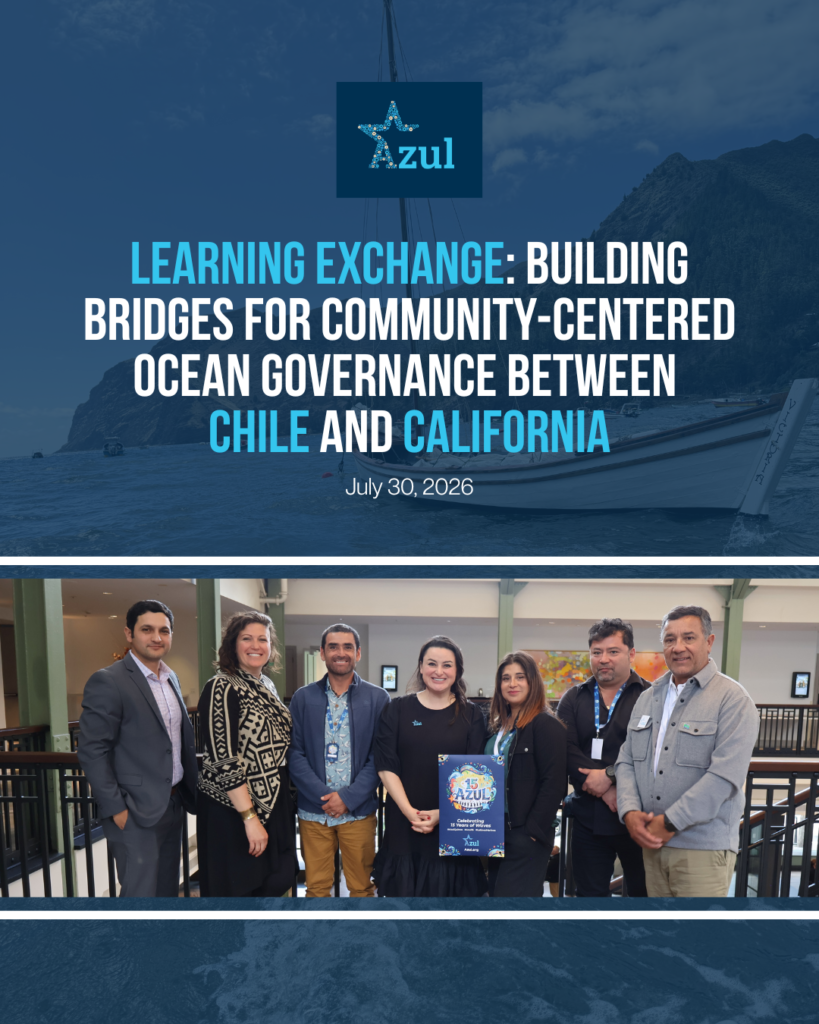
That question inspired the Learning Exchange: Building Bridges for Community-Led Ocean Governance Between Chile and California, an international collaboration led by Azul in partnership with the Consejo del Mar de Juan Fernández and the Sustainable Fishers Association of Puerto Raúl Marín Balmaceda.
Although separated by thousands of miles, Chile and California share much more than the Pacific Ocean. Both regions are home to extraordinary marine ecosystems and have long histories of leadership in ocean conservation. They also face many of the same challenges: how to protect biodiversity while strengthening local economies, how to ensure communities have a meaningful role in decision-making, and how to build governance models that integrate science, local knowledge, and public participation.
Throughout 2026, representatives from both countries participated in reciprocal visits to share experiences, engage with local communities, learn from one another’s governance models, and explore new opportunities for collaboration. From discussions with artisanal fishers and local leaders in the Juan Fernández Archipelago to meeting decision-makers during California Ocean Day, the exchange identified innovative practices that can strengthen ocean conservation in both regions.
The Learning Exchange comes at a pivotal moment for both partners. While California continues to lead the world’s first adaptive management process for a statewide network of marine protected areas and builds on its recognition through the IUCN Green List, Juan Fernández is beginning its own journey toward Green List certification, supported by collaboration and knowledge sharing facilitated by Azul.
More than a series of visits, this exchange is built around a simple but powerful idea: the strongest ocean policies are those that place people at the heart of the solution.
Related Content
• Reel: Chilean conservation leaders in California
• Media: Azul on NBC Bay Area’s OpenRoad
Purpose and Vision
This Learning Exchange is a collaborative initiative designed to foster strategic collaboration between community-led ocean governance models in the Chilean communities of the Juan Fernández Archipelago and Puerto Raúl Marín Balmaceda, and partners in California within the framework of existing coastal and ocean policies. The initiative seeks to move beyond traditional consultation by exploring how community governance can inform and strengthen institutional ocean protection in both regions while advancing innovative policies that protect both people and the ocean.
Participants
• Consejo de Mar de Juan Fernández, Chile
• Asociación Gremial de Pescadores Sustentables de Pto. Raúl Marín Balmaceda, Chile (PESCASUS RMB AG)
• Azul, California, USA
Calendar of Activities
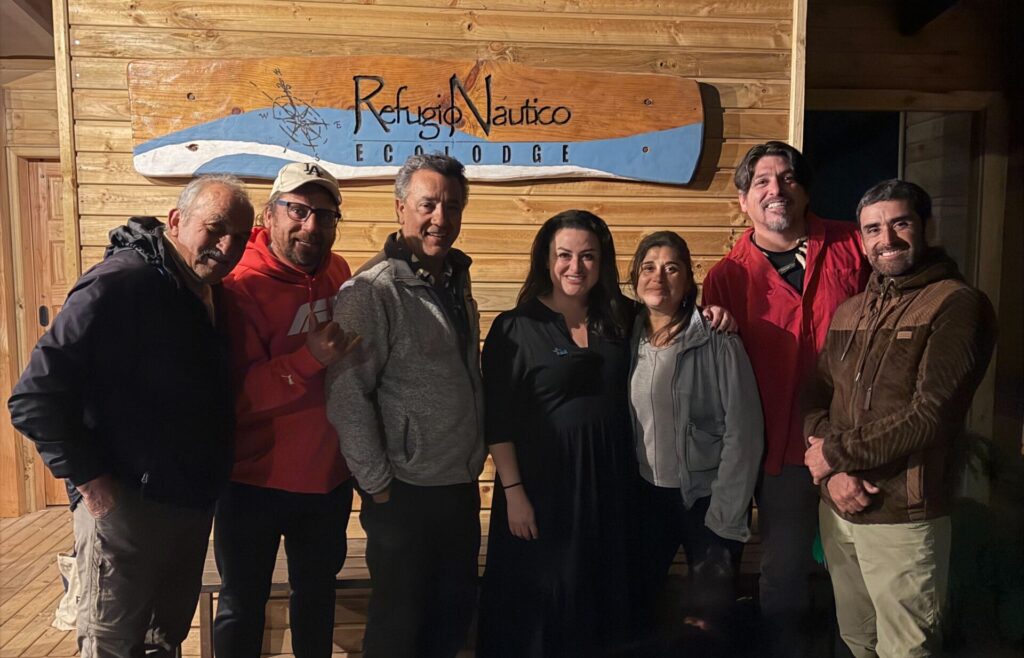
February Visit – Azul in the Juan Fernández Archipelago
The first phase of the exchange allowed Azul to experience firsthand the community-centered governance model developed throughout the Juan Fernández Archipelago. Through observing governance meetings and participating in conversations with local leaders and field-based activities, the delegation was able to witness a successful example demonstrating that marine conservation, artisanal fisheries, cultural identity, and economic development are the building blocks for a community-driven management model.
Events
• Attended a meeting of the Board of Directors for the Consejo del Mar de Juan Fernández
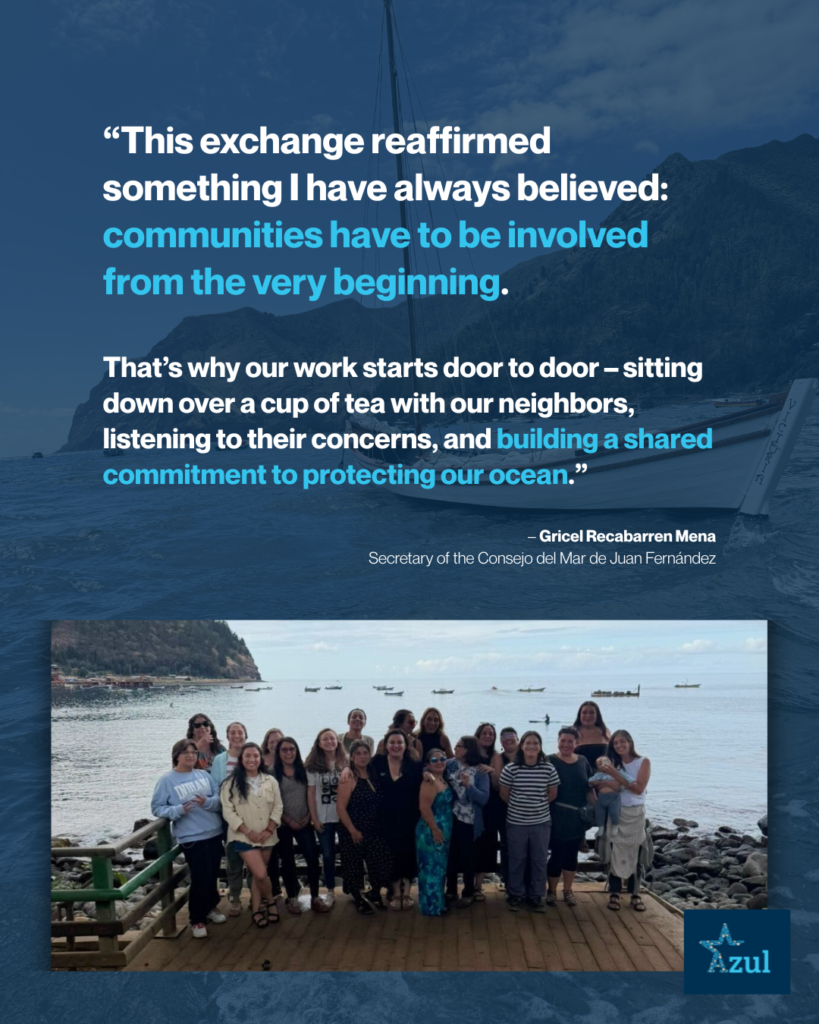
• “Mujeres y el Mar” (“Women and the Sea”) community dialogue highlighting the role of women in marine conservation and stewardship
• Meetings with local government officials, including Mayor Pablo Manríquez
• Fishing outing with Daniel González, President of the Juan Fernández Archipelago Artisanal Fishers’ Union
• Meetings with local conservation organizations, including Fundación Endémica, Fundación Islas de Nazca, and Oikonos
• Diving excursion with Marenostrum to experience the archipelago’s marine ecosystems firsthand
• Visit to El Yunque Plaza and Juan Fernández Archipelago National Park
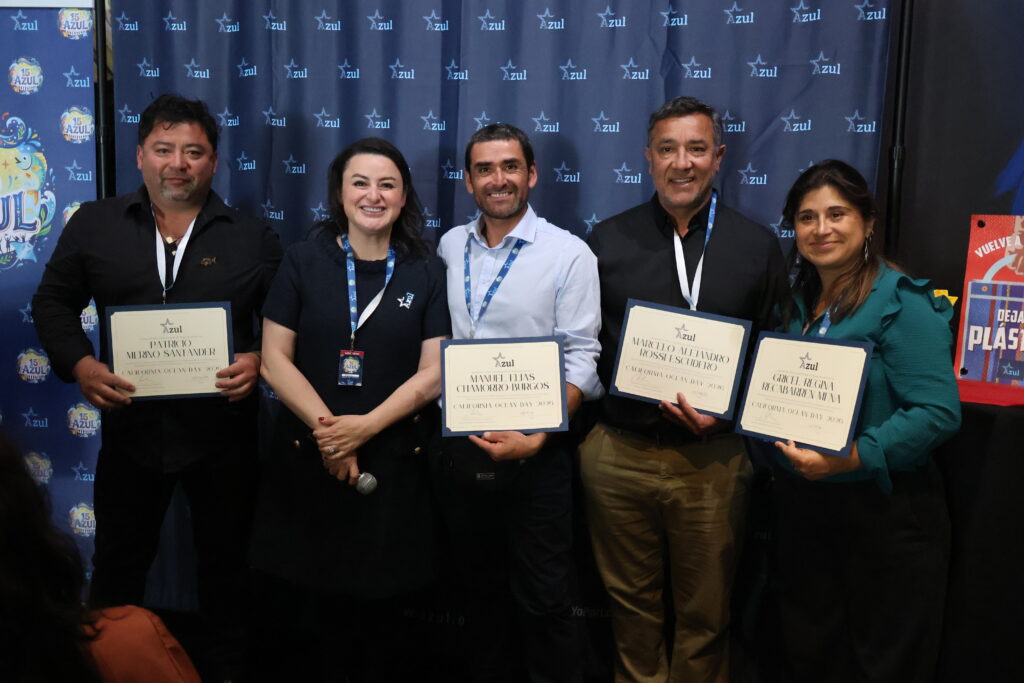
April Visit – Chilean Conservation Leaders in California
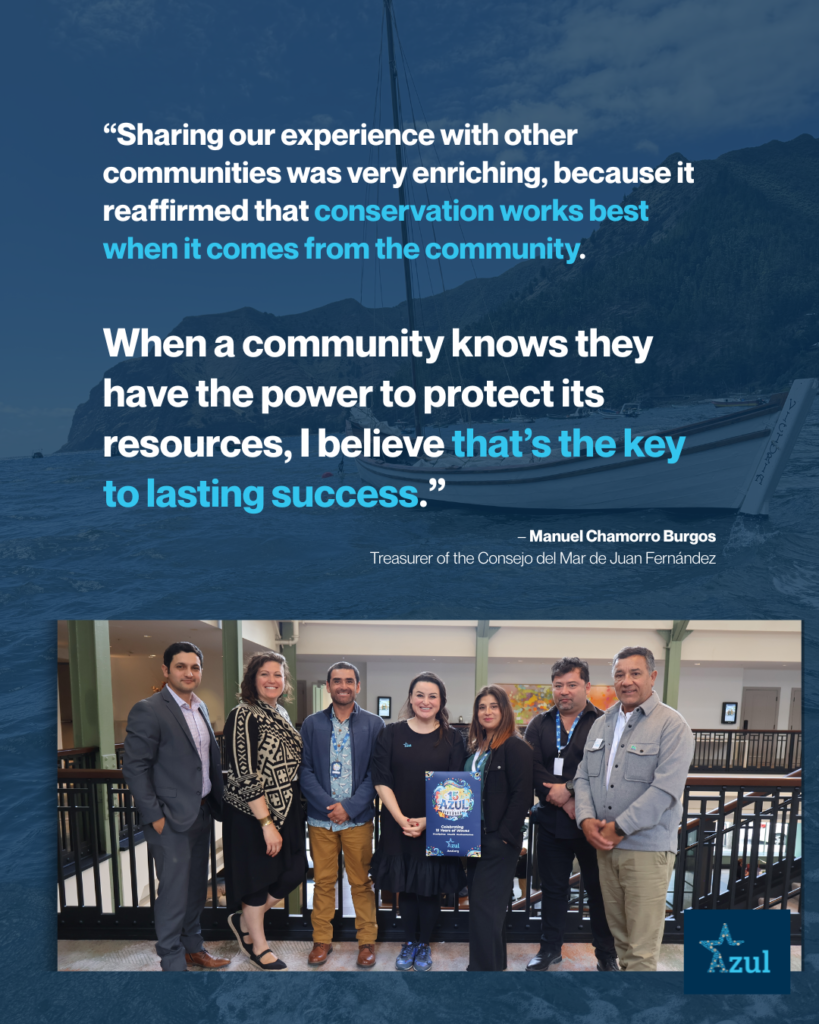
The second phase of the exchange brought representatives from the Consejo del Mar de Juan Fernández and the Asociación Gremial de Pescadores Sustentables de Pto. Raúl Marín Balmaceda to California to learn about ocean policy advocacy, marine protected area management, and public participation in coastal governance. The visit connected Chilean community experiences with California’s institutional processes, creating opportunities for mutual learning and adaptation.
Events
• Meeting with the California Ocean Protection Council to understand California’s process for achieving IUCN Green List certification for its statewide Marine Protected Area (MPA) Network
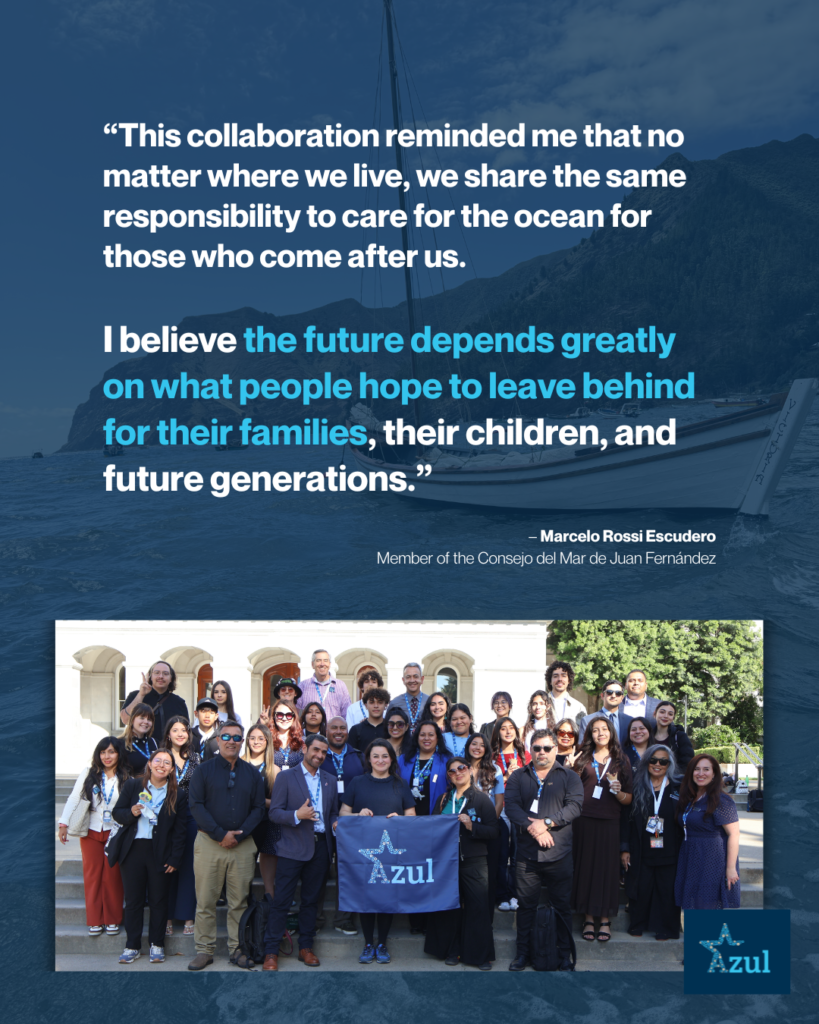
• Participation in California Ocean Day, the state’s annual ocean advocacy day at the Legislature, including meeting State Assembly Members, members of the California Fish and Game Commission, California Coastal Commission, and staff from the California Department of Fish and Wildlife
• Participation in California Ocean Day panel discussions focused on best practices for community-based governance and management of marine protected areas.
• Participation in the California Ocean Day press conference commemorating the 50th Anniversary of the California Coastal Act
• Interviews for NBC Bay Area’s OpenRoad program as part of a special feature celebrating Azul’s 15th Anniversary (broadcast July 25)
• Site visits to coastal areas throughout the San Francisco Bay Area, including Pillar Point State Marine Conservation Area (Half Moon Bay) and Golden Gate National Recreation Area (Sausalito)
• Behind-the-scenes visit to the Monterey Bay Aquarium, including research and laboratory facilities
• Took part in Azul’s 15th Anniversary Celebration
Ongoing Collaboration
• Azul is sharing lessons learned from California’s successful process of achieving IUCN Green List recognition for its Marine Protected Area Network. During the summer of 2026, the Consejo del Mar de Juan Fernández began its own IUCN Green List certification process, following California’s innovative approach of pursuing certification as a biologically connected network of marine protected areas rather than as individual protected sites.
Key Lessons
The Juan Fernández model demonstrates how economic development and marine conservation can be intentionally aligned rather than treated as competing priorities.
• Structured Decision-Making: Moving beyond symbolic participation by implementing shared, structured decision-making processes where local communities serve as the primary architects of governance.
• Intergenerational Leadership: Building upon place-based knowledge and generations of stewardship to ensure conservation efforts remain culturally meaningful and enduring.
• Economic Resilience: Demonstrating that fishing-dependent communities can become global leaders in marine conservation when they are trusted as leaders and decision-makers within the process.
As Juan Fernández begins its journey toward IUCN Green List certification, it can draw upon Azul’s first-hand experience as part of the Expert Assessment Group for the Green List (EAGL) in California’s innovative certification process.
• From Individual Site Evaluation to Network Evaluation: Rather than evaluating 124 individual marine protected areas, California’s assessment focused on governance, management, and conservation outcomes across the statewide network and regional systems.
• Network-Level Design: The evaluation confirmed that California’s network protects representative ecosystem components, provides habitat redundancy across bioregions, and maintains ecological connectivity throughout the network.
• Adaptive Management: California is currently undertaking the world’s first adaptive management process for a statewide network of marine protected areas, ensuring the network remains responsive to emerging environmental and social challenges.
Quotes
Marcela Gutiérrez-Graudiņš, Founder and Executive Director of Azul:
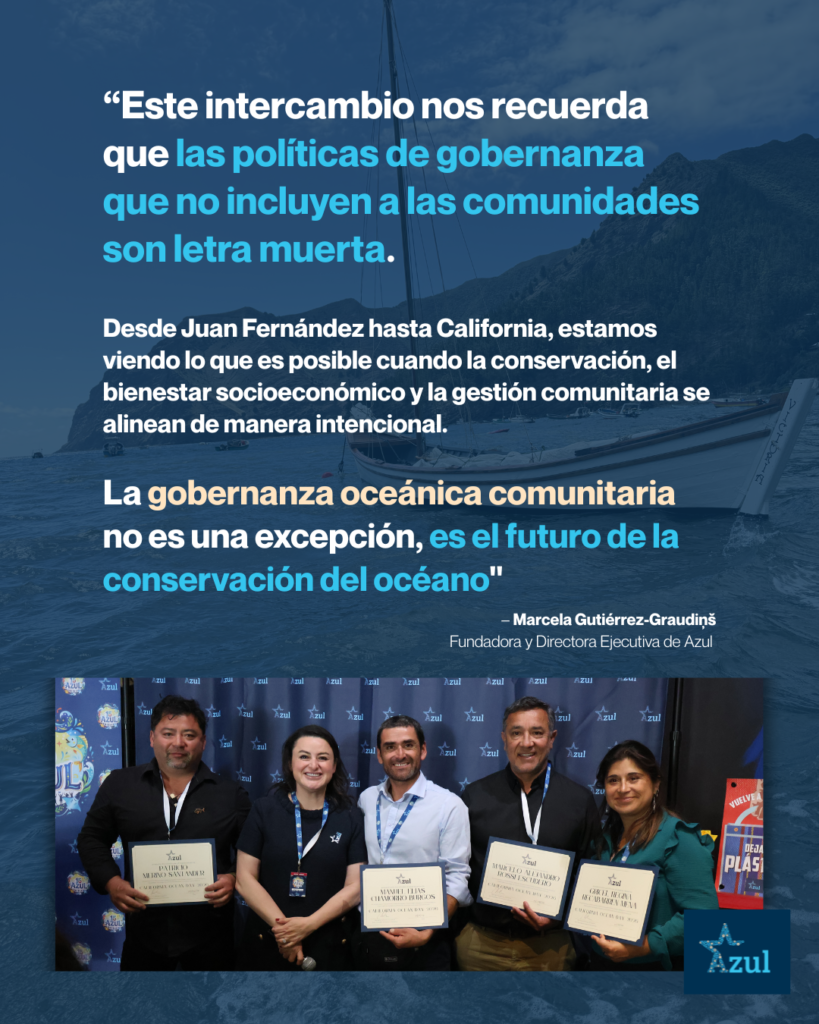
“This exchange is a powerful reminder that policy without people is just paper. From Juan Fernández to California, we are seeing what becomes possible when conservation, socioeconomic well-being, and community governance are intentionally aligned. Community-led ocean governance should not be the exception—it is the future of ocean conservation.”
Julio Chamorro Solís, President of the Consejo del Mar de Juan Fernández:
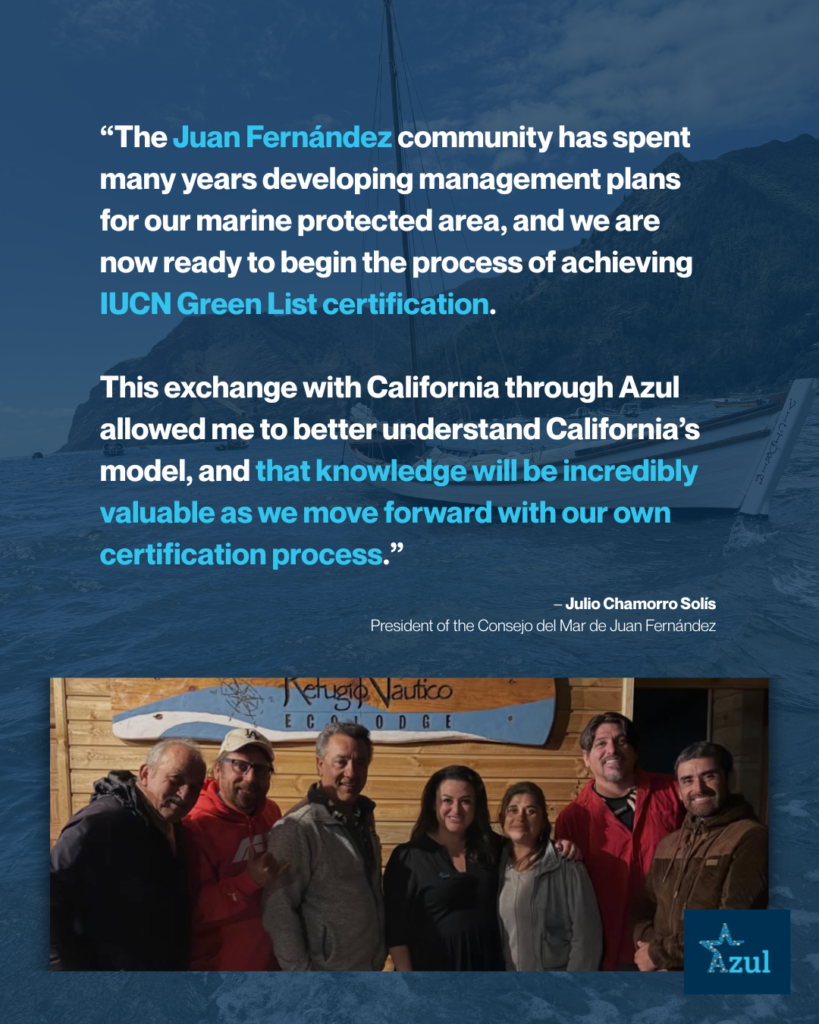
“The Juan Fernández community has spent many years developing management plans for our marine protected area, and we are now ready to begin the process of achieving IUCN Green List certification. This exchange with California through Azul allowed me to better understand California’s model, and that knowledge will be incredibly valuable as we move forward with our own certification process.”
Patricio Merino Santander, President of the Asociación Gremial de Pescadores Sustentables de Puerto Raúl Marín Balmaceda (PESCASUS RMB AG):
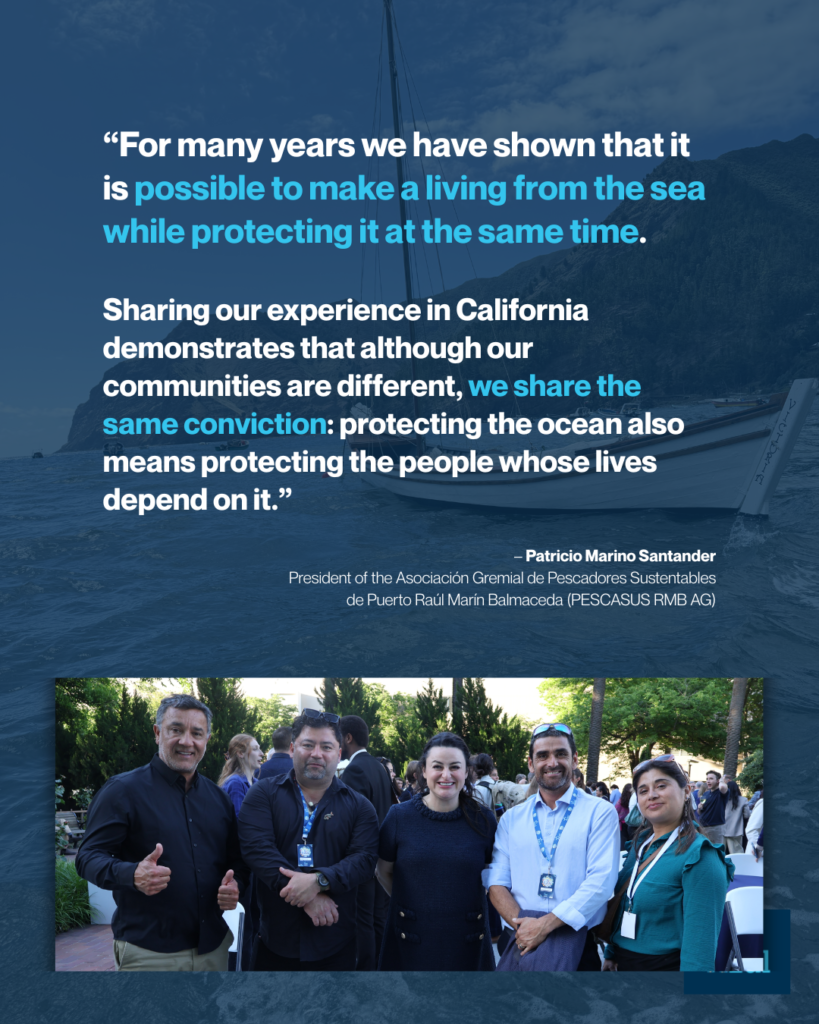
“For many years we have shown that it is possible to make a living from the sea while protecting it at the same time. Sharing our experience in California demonstrates that although our communities are different, we share the same conviction: protecting the ocean also means protecting the people whose lives depend on it.”
Socioecological Connections
This exchange highlights the unique historical and ecological parallels between Chile and California. From shared histories of migration and maritime trade to the protection of similar kelp forest ecosystems, these regions provide fertile ground for mutual learning around equity, public access, and the social dimensions of marine governance.
Commitment to Continued Collaboration
This Learning Exchange reflects the participants’ long-term commitment to marine conservation and community leadership. By fostering direct engagement, knowledge sharing, and intergenerational collaboration, the initiative celebrates community-centered models of ocean governance that recognize the health of the ocean as inseparable from the well-being of the people who have long served as its stewards.