From Community to Coast: Lessons in People-Centered Ocean Governance from Juan Fernández Archipelago
From Community to Coast: Lessons in People-Centered Ocean Governance from Juan Fernández Archipelago
By Marcela Gutiérrez-Graudiņš
Getting to Juan Fernández is not simple — and that is part of the lesson.
Earlier this year, I made the long journey to the islands, and to explain it to my five-year-old, I described it simply: a big flight to Mexico City, another to Santiago, and then a tiny eight-seat plane to Robinson Crusoe Island. From there, a truck to a dock and an hour-long boat ride finally brought me to the only permanently inhabited town in the archipelago, San Juan Bautista.
The journey is shaped entirely by weather, weight limits, and port logistics. Luggage is weighed to the kilogram. Passengers submit their body weight in advance so pilots can balance the plane. Even paying for extra baggage depends on whether there is space left after essential cargo. On the return flights, that space is often filled with lobster — the economic backbone of the island.
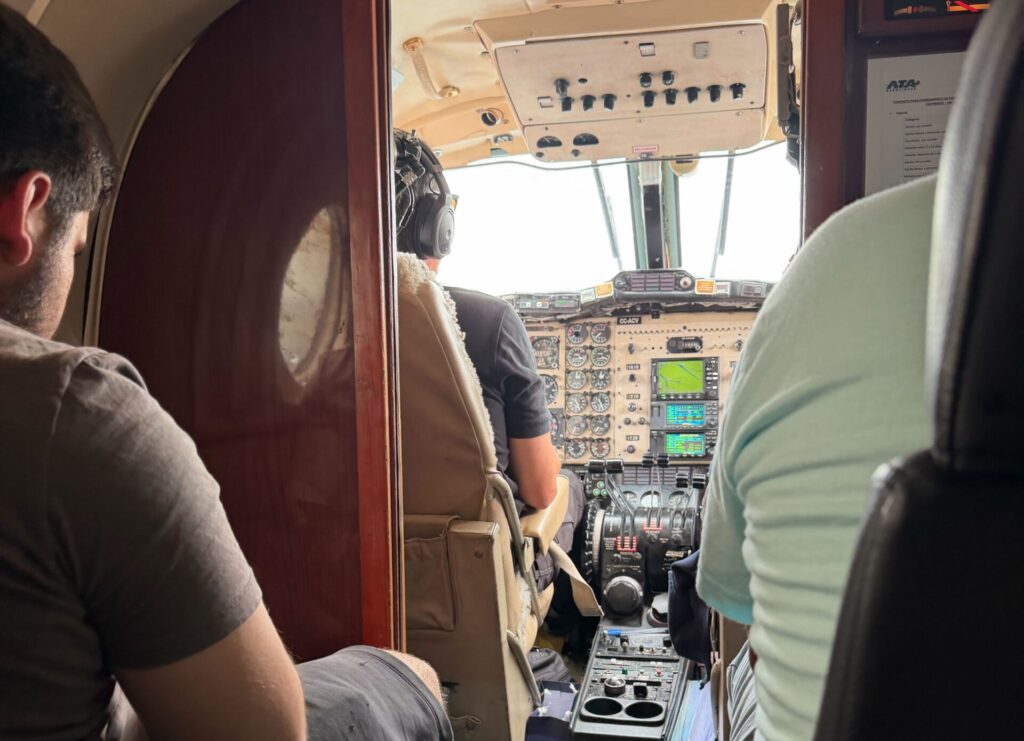
Part of Marcela’s journey to Juan Fernandez included a flight in an eight-seat plane where everything is weighed to the kilo (Source: Azul)
As someone who began her career at the intersection of fisheries, logistics, and later conservation policy, the trip felt both familiar and deeply personal. But the real reason I came had little to do with travel mechanics — and everything to do with people.
My connection to Juan Fernández began about a decade ago, when I met a group of fishers at an international conservation conference. We spoke Spanish in a sea of English, and I introduced myself the way I always do — through shared language and shared culture. Years later, that connection resurfaced at the COP16 conference (Convention on Biological Diversity) in Colombia, where leaders from the island were once again advocating for ocean protection on the global stage.
If you work in ocean conservation, you have likely heard of Juan Fernández — often described as one of the strongest examples in the world of community-led ocean protection. Fishing families here are widely recognized for leading efforts to protect and expand the waters around their islands, while remaining deeply dependent on fishing for their livelihoods.
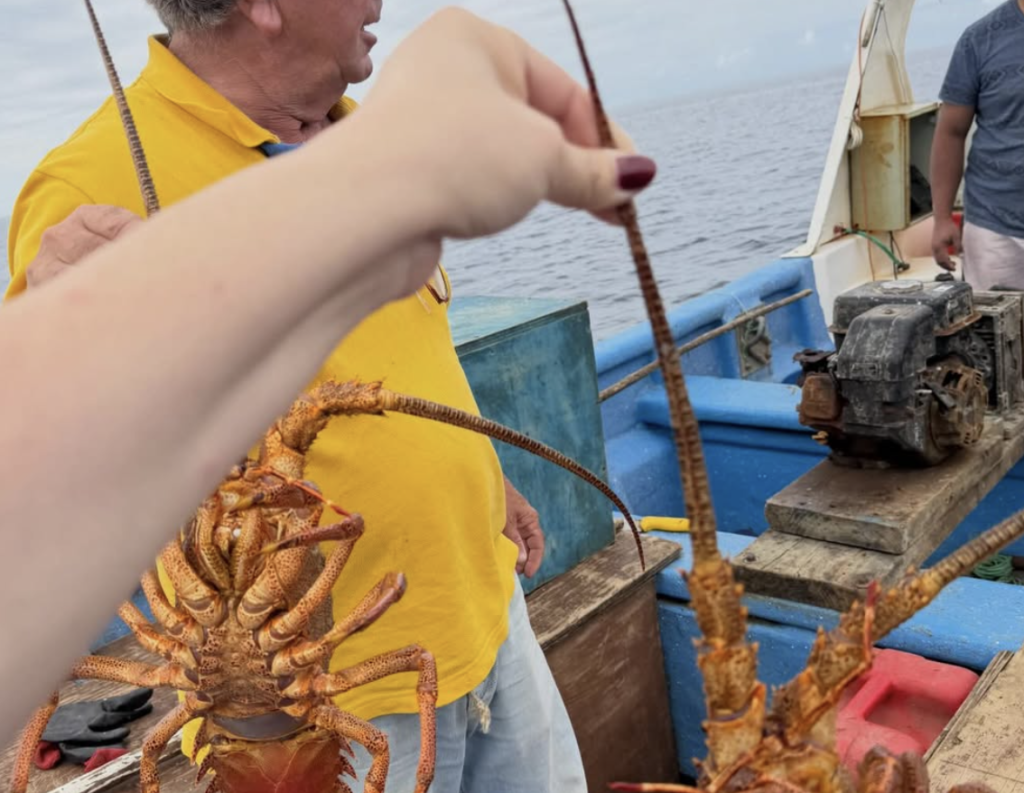
During the trip, Marcela spent a day at sea with the president of the local artisanal fishers’ union STIPA-JF and Consejero del Mar, Daniel González, and helped measure lobsters; self-imposed regulations include a maximum size of lobsters that can be caught. (Source: Azul)
That combination is rare. Roughly 70 to 80 percent of the local economy depends on fisheries, especially lobster. And yet, this community has become one of the most visible champions of large-scale marine protected areas (MPAs) and the High Seas Treaty — also known as BBNJ, or Biodiversity Beyond National Jurisdiction.
What drew me back — this time, all the way to the island — was a deeper question: what does people-centered governance actually look like on the ground? This is a question I have been carrying with me since 2008, when I was a stakeholder in California’s Marine Life Protection Act (MLPA) process, and one that continues to shape how I reflect on both that experience and the ongoing evaluations of coastal governance today. Our work sits at the intersection of marine and coastal governance, environmental justice, and civic participation — an interest first sparked through the MLPA process, and one that has only deepened as I continue to witness how decisions about the ocean can affect communities in very real and unequal ways.
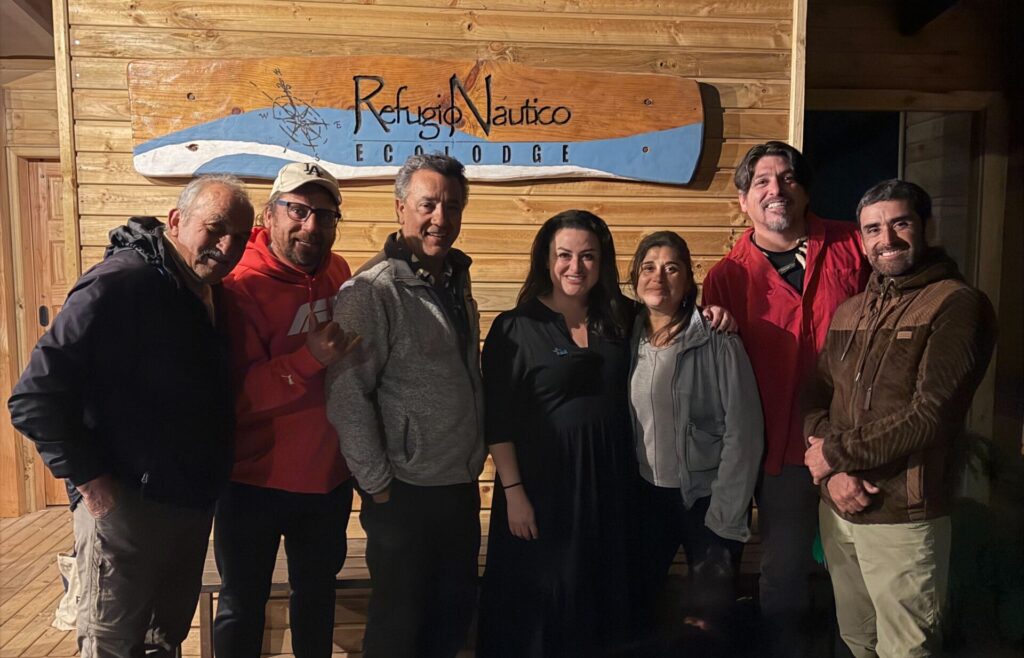
Marcela with members of the Organización Comunitaria Funcional and Consejo del Mar (Source: Azul)
A Living Model of Participatory Governance
Protected areas can only thrive when communities believe in them. In Juan Fernández, that belief is visible and organized.
Local ocean governance is coordinated through the Consejo de Mar de Juan Fernández — a local management council that brings together public agencies, the navy, municipal authorities, and the Organización Funcional Comunitaria (OCF). The OCF is a participatory body that includes fishing leaders, tourism operators, women, senior citizens, and youth. Leaders are elected. Working groups are open. Community meetings are regular. Which may explain why support for expanding marine protected areas is consistently reported at more than 90 percent of the population — and why the community is now leading a public campaign calling on the President of Chile to expand the marine protected area around Juan Fernández.
What stood out to me was how intentional the design of participation is. This is not symbolic consultation. It is structured, shared decision-making.
I listened as community leaders described how earlier generations recognized the impacts of industrial fishing long before “sustainability” became an international concept. As one fisherman explained, they were already talking about limits, care, and stewardship a hundred years ago, simply because their survival depended on it.
This is governance rooted in lived experience. It is also community organizing in its most essential form.
In this case, protected areas do not come from one leader, one organization, or one outside funder. They come from people organizing — over years, sometimes decades — to celebrate their way of life.
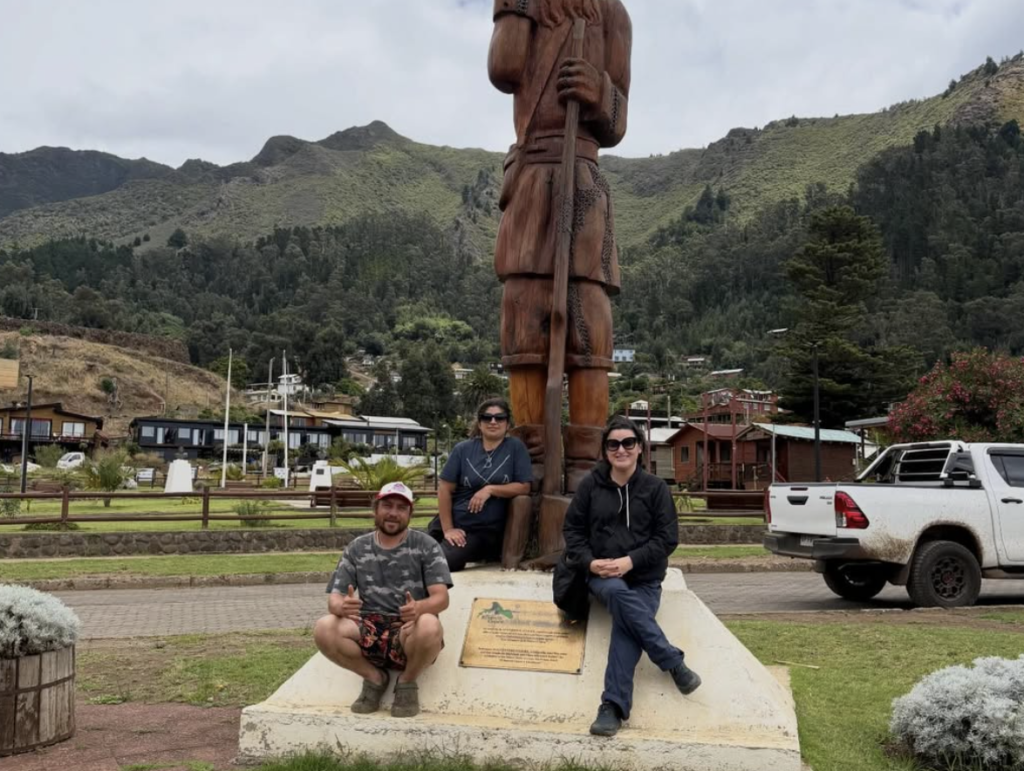
Marcela (right) with Gricel Recabarren, member of the Consejo del Mar (center), and Daniel González, the president of the local artisanal fishers’ union STIPA-JF and member of the Consejo del Mar (left). (Source: Azul)
One of the most striking stories I heard was how the community itself requested a stronger fisheries authority presence on the island. Rather than resisting oversight, local leaders asked the government to place an official fisheries observer on site. They wanted institutions that could reinforce what the community was already building.
That decision speaks volumes about the governance culture that has emerged here — one built on responsibility, not avoidance.
During my visit, I had the opportunity to meet with Mayor Pablo Manriquez, who is also a member of the Consejo del Mar and a strong advocate for their protected areas. Mayor Manriquez emphasized a pressing need to establish a scientific research station on the island, so that the community and decision-makers can better monitor, understand, and steward the archipelago’s waters.
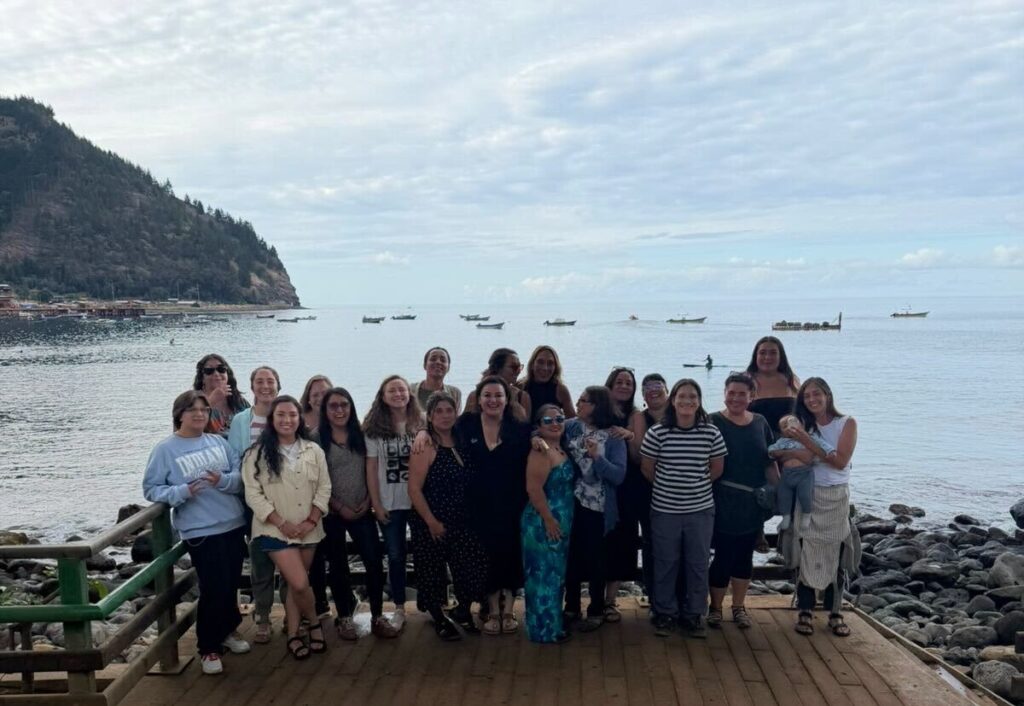
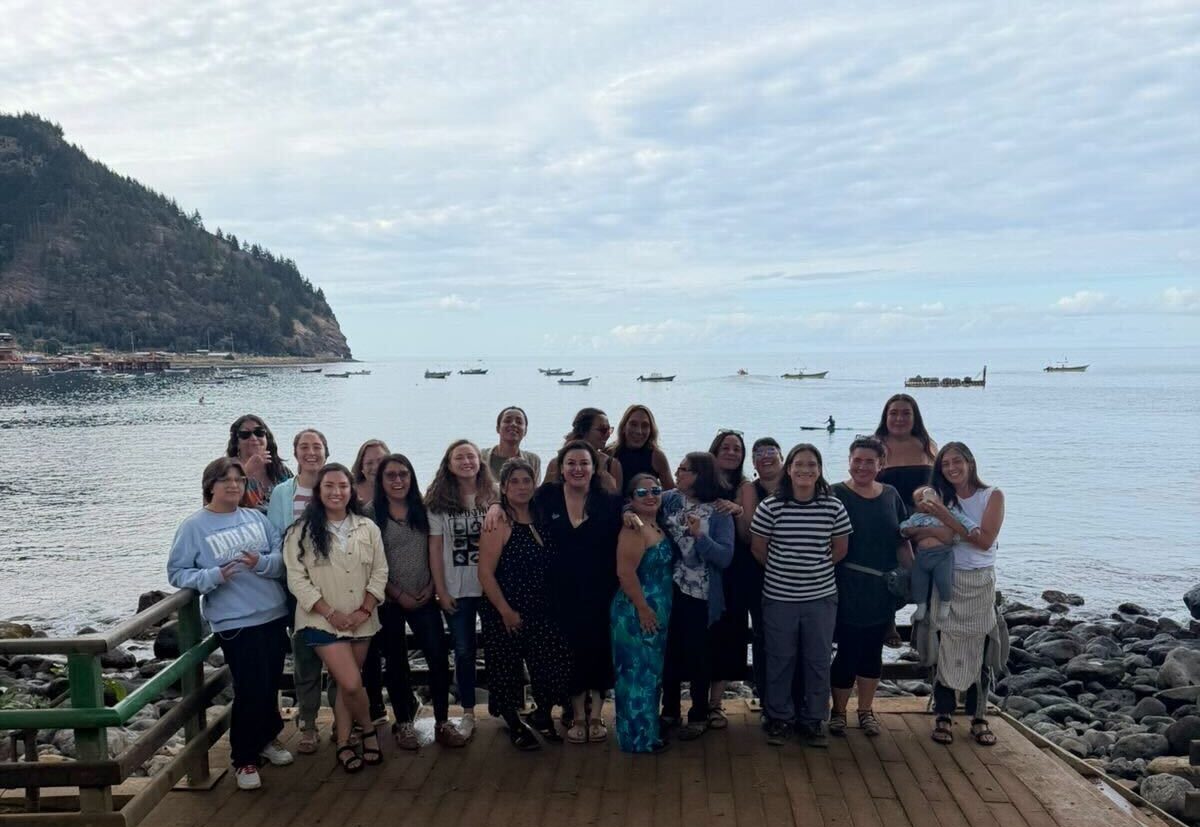
Marcela with women from Juan Ferndandez at Mujeres del Mar, an event convened by Gricel Recabarren and co-hosted by Azul. (Source: Azul)
Women, Leadership, and the Ocean
One of the most powerful moments of the visit was a roundtable convened by Gricel Recabarren — who serves as Secretary on the Functional Community Organization, the local management council — and co-hosted by Azul, called Mujeres y el Mar. Around two dozen women — many of them mothers, some with babies in their arms — came together to talk about their relationship to the ocean, to fishing, to conservation, and to leadership.
The conversation ranged from employment and training opportunities to participation in governance and representation. Having previously worked in the commercial fisheries industry myself, many of the stories shared felt deeply familiar.
What made the gathering especially meaningful was that it did not end with conversation. It sparked concrete ideas for collaboration, exchange, and mutual learning between the women.
This is what movement-building looks like when it is rooted in trust and shared experience.
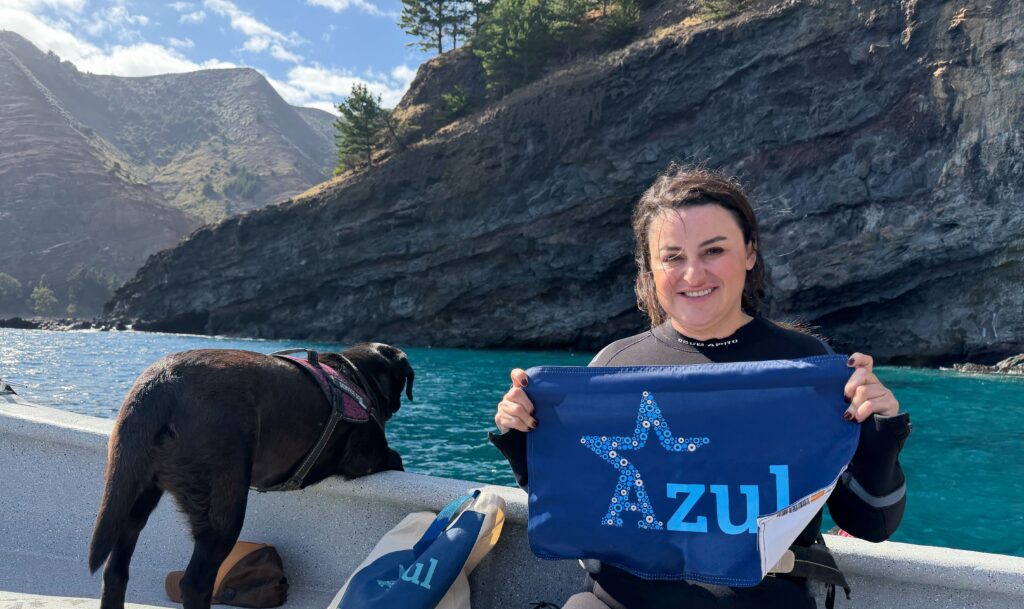
Marcela spent a lot of time on the water while in Juan Fernandez, and even had the opportunity to go diving. (Source: Azul)
Learning from Tradition
To understand marine governance in the Juan Fernández Archipielago, you must understand fishing on the island.
The primary fishery is lobster, and its management is deeply cultural. Fishers use wooden traps rather than plastic or metal. Families maintain inherited fishing areas known locally as marcas — precise locations passed down through generations. The fishery is intensely place-based, shaped by underwater terrain and long-held knowledge of local currents and habitats.
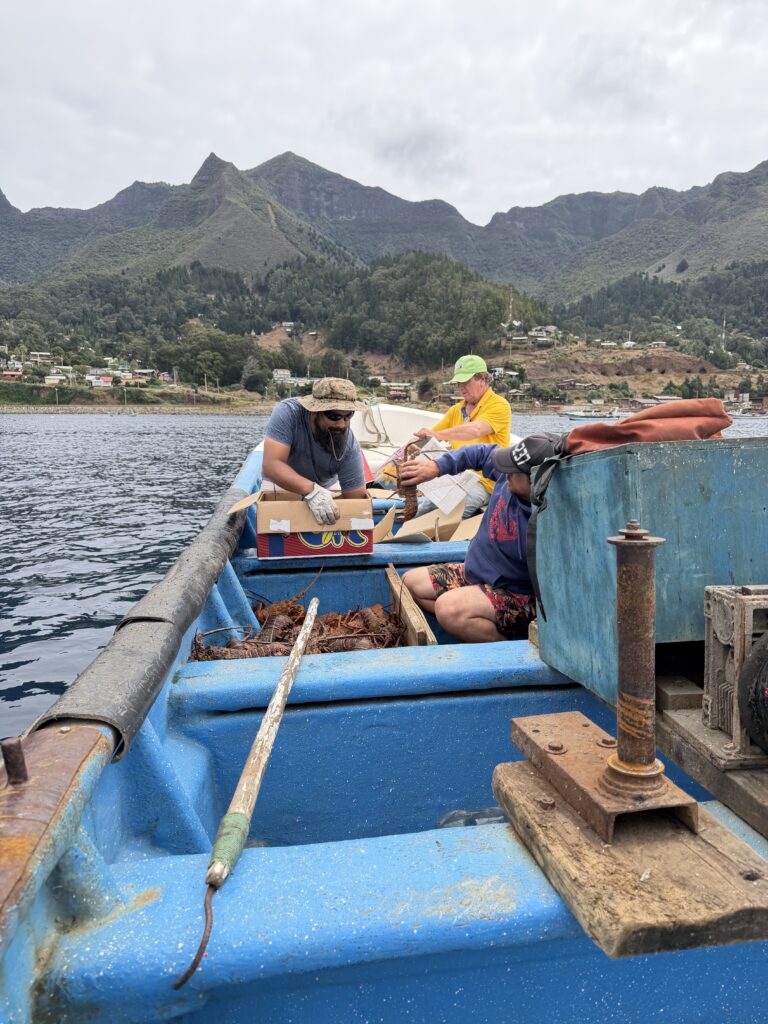
Marcela spent a day at sea with the president of the local artisanal fishers’ union STIPA-JF and Consejero del Mar, Daniel González, and his crew, Felipe Rivas and Germán Osman.
During a day at sea, I joined Daniel González, president of the local artisanal fishers’ union STIPA-JF and also a Consejero del Mar, along with Felipe Rivas and Germán Osman — as they worked to harvest the day’s catch and get it onto that afternoon’s flight. (They did, with about a minute to spare.) Drawing on my own background in the fishing sector, I tried my best to not get in the way, helping measure lobsters and fish for bait as I moved across the narrow deck to stay balanced while the crew worked.
It was demanding, fast-paced, and physically intense. It was also an intimate window into how stewardship and livelihood are inseparable in this community.
Later, I toured processing and refrigeration facilities and learned about potable water access, export challenges, and infrastructure constraints that shape daily decisions for fishers. These operational realities must always be part of conservation planning — yet they are too often overlooked in high-level policy discussions.
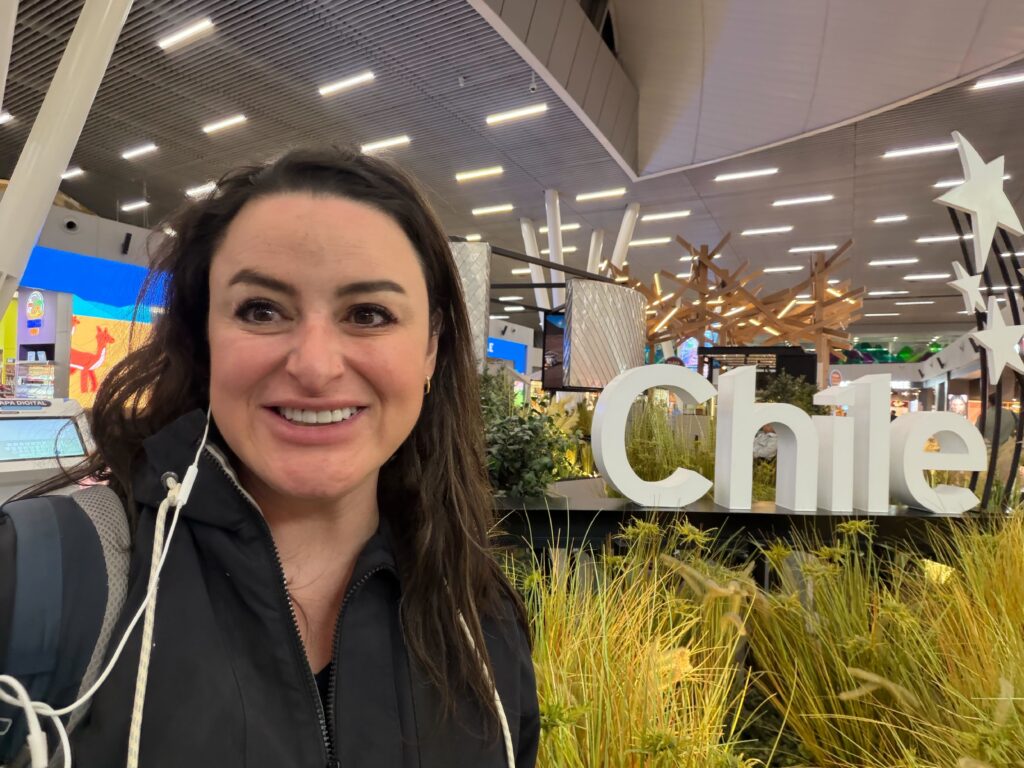
From California to Chile! Marcela touching down in Chile at the airport in Santiago. (Source: Chile)
Connecting Chile and California
Beyond the islands, the trip created space for deeper collaboration on coastal governance.
In Santiago, I met with Carolina Martínez-Reyes, Ph.D., who leads the coastal governance research center Observatorio de la Costa at the Pontificia Universidad Católica de Chile. The connection was made by Charles Lester, former head of the California Coastal Commission and now the Director of the Ocean and Coastal Policy Center at UC Santa Barbara — where I currently serve on the Steering and Advisory Committee of the California Beach Resiliency Plan project.
Our conversations focused on public participation, equity, and the future of coastal governance in both countries — at a moment when Chile is exploring new legislative frameworks, and California is reflecting on decades of experience as the Coastal Act marks its 50th anniversary. Notably, reports submitted to the Chilean Congress reference California’s coastal governance model and highlight Azul’s work and other community organizations’ efforts as a potential pathway for shaping future coastal governance in Chile.
I also connected with Jacko González, President of Sustainable Ocean Alliance in Chile; Felipe Cárcamo-Moreno, a marine sociologist with deep experience in socio-environmental project management; Patricio Merino, Executive Director of Fundación Área Marina Pitipalena Añihué; and Silicon Valley Latino’s own Sergio Domeyko — to explore how social inclusion, intergenerational leadership, and environmental decision-making can be strengthened together.
Across all of these conversations, one message was clear: participation, access, and equity are not peripheral to ocean conservation. They are its foundation.
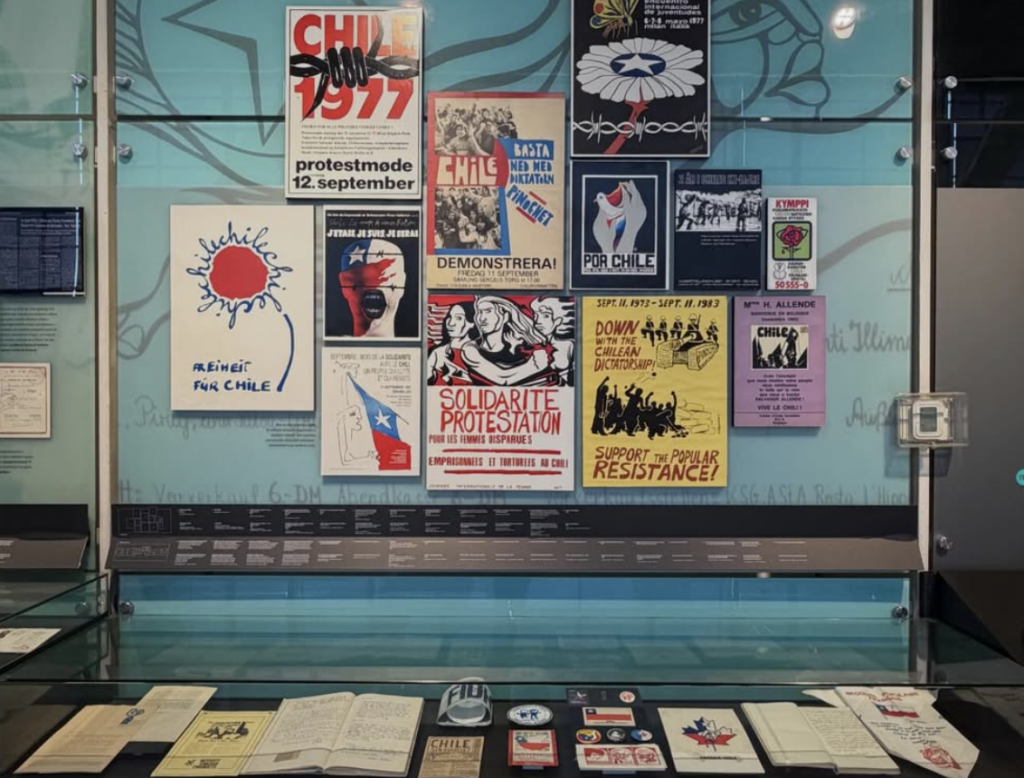
Historical collection of posters and books in Chile (Source: Azul)
Histories That Connect Continents
The connection between Chile and California is not new.
In San Francisco — particularly in North Beach, near Jackson Square — historical plaques still reference Chilecito, or “Little Chile,” a reminder that Chilean merchants and miners were among the earliest international communities to arrive during the Gold Rush. Today, that connection continues through shared knowledge of similar coastal ecosystems, kelp forest protection, and a governance exchange championed by entities like the Chile California Conservation Exchange (CCCX).
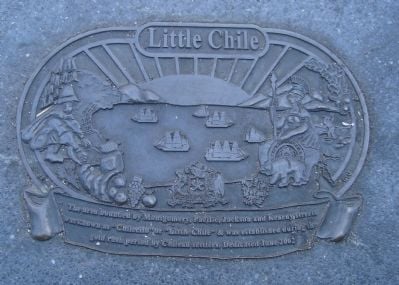
Little Chile Plaque at North Beach in San Francisco. (Source: Historical Marker Database, Photographed by Barry Swackhamer, August 10, 2012)
Juan Fernández itself is layered with history. The island famously inspired Robinson Crusoe, based on the real story of the marooned sailor Alejandro Selkirk. Less widely known is its role in global maritime history — from pirate routes to World War I naval battles, including the sinking of the German cruiser SMS Dresden just offshore. Exploring these stories with entrepreneur and local historian Germán Recabarren — who, along with his wife Gloria, was my very patient guide through my first-in-decades effort to scuba dive — revealed something deeper than tourism lore. It reinforced how profoundly the ocean shapes identity here, not only economically but culturally and historically.
These stories matter because they remind us that Juan Fernández has always been connected to the world. The same is true today.
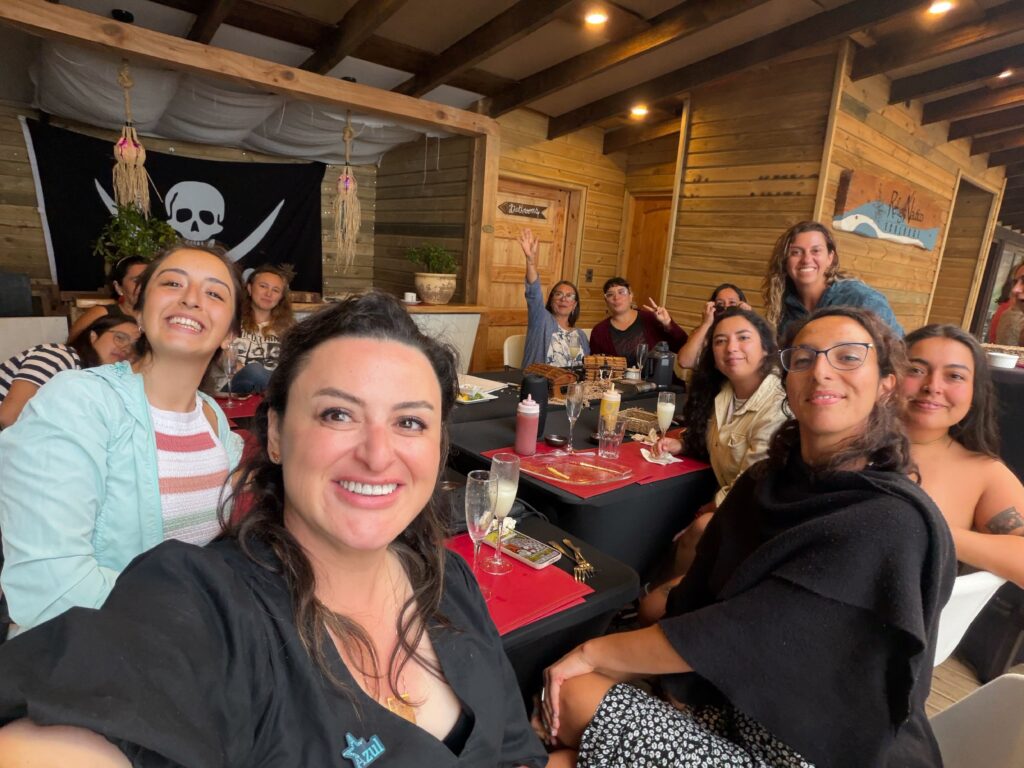
Power in community: Marcela with women from Juan Fernandez at the Mujeres y el Mar gathering. (Source: Azul)
The Power of Being There
In the end, the most lasting impact of this trip was not a single meeting or policy conversation. It was the act of being present.
Sitting with community members. Learning names. Hearing how people see themselves as caretakers not only for today but for future generations — “I want my child to eat what my grandfather ate.”
That continuity — past, present, and future — is the foundation of Juan Fernández’s success.
At the same time, I want to be clear: this success does not mean the process is simple or without tension. As with any ambitious, community-driven conservation effort, there are real and valid questions about representation, decision-making, and how leadership evolves over time. I heard those concerns directly, and they matter. The nature of the OCF’s leadership structure — with established electoral cycles, upcoming this fall — provides an important opportunity for the community to debate these concerns openly and to continue shaping how its governance structures grow.
At a time when global conservation can feel abstract or overwhelming, Juan Fernández offers something tangible: proof that when people are trusted, included, and respected, they build systems that last.
Azul was founded on that belief. This visit reaffirmed it.
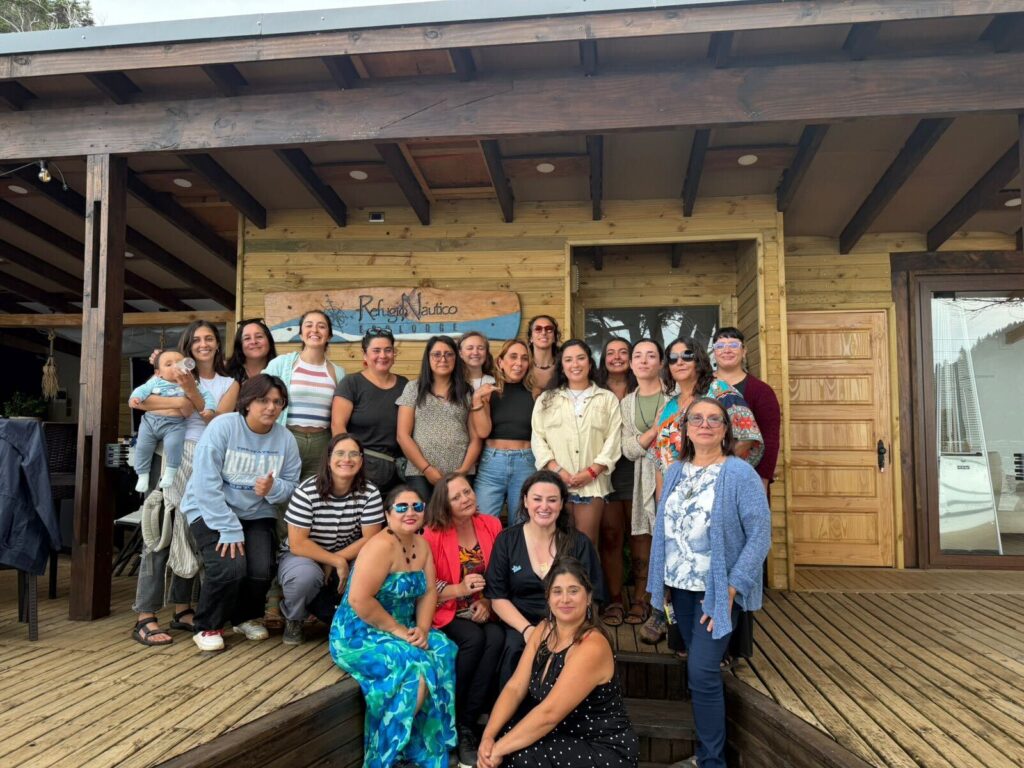
Marcela with women from Juan Fernandez at the Mujeres y el Mar gathering. (Source: Azul)
With deep gratitude to the Organización Funcional Comunitaria Mar de Juan Fernandez; to Mayor Pablo Manriquez, to local leaders Daniel González, Gricel Recabarren, and Julio Chamorro; to organizations Fundación Endémica, Fundación Islas de Nazca and Oikonos; and to the many community members who opened their homes, boats, and hearts — Manuel, Karin, Clemente, Felipe, Areliz, Genesis, Marcelo, German, Gloria and many more. This is not the end of the story. It is the continuation of a shared journey toward ocean justice — by communities, for communities.
Marcela Gutiérrez-Graudiņš is the Founder and Executive Director of Azul (azulmar.org), a California-based nonprofit dedicated to ocean and environmental justice for Latino communities. She is a 2025 Latino Spirit Award recipient for Environmental Justice.